Bill
Wolfe, D.D.S., N.M.D.

Bactericidal
Studies
Various percentages of Aloe Vera gels were tested in culture
media consisting of the following organisms: Staphylococcus aureus, Streptococcus viridans,
Candida albicans, Corynebacterium xerosis, and the five strains of Streptococcus
mutans most commonly found in dental plaque. The gel was bactericidal
against the above bacteria and fungicidal against Candida albicans (the
cause of moniliasis or 'denture sore mouth.') An important finding
by Zimmerman was that the dramatic effects of the aloe gel were not apparent
until there was at least a 70% concentration of the gel. To achieve a 70%
or greater concentration, an Aloe Vera gel must be stabilized with anti-oxidants
in order to minimize the otherwise necessary preservatives which lessen
the percentages of Aloe Vera in the product.
Virucidal
Studies
The Aloe Vera gel formula was found to be virucidal against Herpes simplex
and Herpes zoster viruses.
Anti-inflammatory
Studies
Prednisolone and Indomethacin (common anti-inflammatory drugs) were utilized
in a comparative study with the Aloe Vera gel to observe the effects on
tissue culture cells. The gel was found to be just as effective as Prednisolone
and Indomethacin, without having the long term toxicity of either drug.
Cell
Cytotoxicity Studies
Human embryonic kidney cells (HEK cells) were utilized to determine the
effectiveness of aloe gel on cellular longevity. The cellular death rate
was found to be reduced by 2/3 when cultured with the aloe gel. Note:
It is important to acknowledge research by Dr. Wendell Winters, Associate
Professor of Microbiology at the University of Texas Health Science Center,
San Antonio, Texas. Dr. Winters found that although Aloe Vera promoted
the growth and healing of healthy human cells, the gel did not have the
unwanted effect of stimulating the growth of cancer cells.
Dr. Zimmerman's
studies proved the Aloe Vera gel formula to be nontoxic, bactericidal,
virucidal, and fungicidal against a broad range of micro-organisms, and
a stimulator of cellular life-extension. This research and the clinical
effects which I had witnessed in my office resulted in a commitment on
my part to discover the uses of the aloe gel in all aspects of dental
health. Now that I had laboratory and clinical evidence of the effectiveness
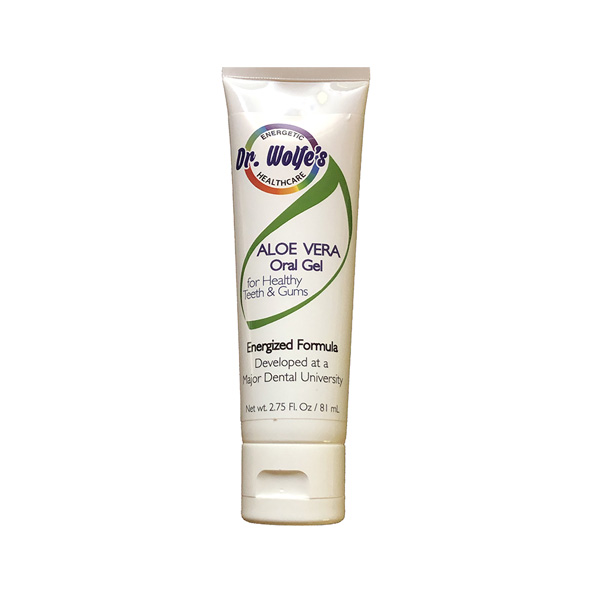
and biocompatibility of my Aloe Vera formula, I felt that the next step
for oral health should be to develop an Aloe Vera-based toothpaste.
Because a tooth
paste or a tooth gel must include abrasives (of which examples are listed
below), a surface active agent (foaming agent), a sweetener to counter
the taste of the various ingredients (including the pungent taste of
aloe gel), and a breath freshener, I was concerned about how much the
healthful properties of the gel might be compromised by being combined
in such a formula. |